Day 30
※御言葉を読む前に、まずは主の前に静まる時間を持ちましょう(2分間)。
その後、御言葉をゆっくりと、3回繰り返して読みましょう。
ルカの福音書 15章20b~24節
20b) ところが、まだ家までは遠かったのに、父親は彼を見つけて、かわいそうに思い、駆け寄って彼の首を抱き、口づけした。
21) 息子は父に言った。『お父さん。私は天に対して罪を犯し、あなたの前に罪ある者です。もう、息子と呼ばれる資格はありません。』
22) ところが父親は、しもべたちに言った。『急いで一番良い衣を持って来て、この子に着せなさい。手に指輪をはめ、足に履き物をはかせなさい。
23) そして肥えた子牛を引いて来て屠りなさい。食べて祝おう。
24) この息子は、死んでいたのに生き返り、いなくなっていたのに見つかったのだから。』こうして彼らは祝宴を始めた。
ディボーショナル
有名なイエス様の「放蕩息子」のたとえ話です。この話には、3人の人物が登場します。父親、兄息子、そして弟息子です。弟息子は、父親が存命中にも関わらず遺産相続を求め、財産を持って遠い国に旅立ちます。しかし、そこで放蕩の限りを尽くして財産をすべて失い、さらに、激しい飢饉に見舞われて食べることにも困り始めます。弟息子は豚のえさでさえ求めましたが、誰も与えてくれません。そこで、ふるさとの父親を思い出し、これまでの罪を謝罪し、息子ではなく召使いとして受け入れてもらうために帰郷する決心をするのです。今日の箇所は、そんな弟息子を父親が受け入れる場面です。しかし、これを見た兄息子は怒りを露わにします(28節)。放蕩を尽くして遺産を使い果たした弟息子を赦し、快く受け入れた父親に対して、不平を漏らすのです。
イエスがこの話を話された文脈を見ると、対象はパリサイ人と律法学者(15章2節)であり、彼らが兄息子に例えられていることが分かります。一方、父親に例えられているのは父なる神であり、父親の態度から、神の愛を伺い知ることができます。今回は父親に注目して、このたとえ話を見ていきます。
父親の細かい描写から、神の愛について非常に多くのことが分かります。まず、父は遠くにいる弟息子に気がつきました。父親は、来る日も来る日も、遠くを眺めながら息子の帰りを待っていたのでしょう。また、いつも息子を思い浮かべていたのでしょう。だからこそ、遠くからでもすぐに弟息子の姿に気づき、確信したのです。息子を見つけた時の父親の反応は、叱ることでも咎めることでもありませんでした。かわいそうに思って、思い切り走っていき、抱きしめて口づけしたのです。当時の社会では、走るという行動は最も身分の低い召使いがとるものでしたが、父は全く気にしませんでした。
息子は、自分は神に対しても父に対しても罪を犯し、もはや息子と呼ばれる資格がないことを父へ伝えます。しかし、父親が息子に対して取った行動は、最も良い服を着せ、指輪をはめ、履物をはかせ、肥えた子牛を屠って祝宴を催すことでした。ここで、服は家族であること、指輪は家を相続すること、そして履き物は家の働きに仕えることを表しています。そして、とっておきの子牛をもって、特別なパーティーを開くのです。つまり、家を相続する息子としてのアイデンティティを回復させたのです。
ここで気づくことは、息子が謝罪をする「前」に、父親の方から駆け寄っていき、抱きしめていることです。息子の罪悪感より、父親の愛の方が大きいことが分かります。そして、謝罪の「後」に、父親との和解が成立したこと、つまり、父と子の関係が回復したことが分かります。つまり、悔い改めの後に、キリストの十字架を通して神との和解がもたらされ、神の子どもとされることが分かります。
スキャゼロ氏は、しばしば教会には弟息子や兄息子は溢れているが、多くの人が本当に求めているのは父のような人だと述べています。自分の望み通りにならなければ、すぐに神から離れてしまう弟息子になったり、あるいは、すぐに怒りや苦々しさ、不機嫌さを募らせる兄息子になるのではなく、私たちの弟や兄の痛みに共感し、率先して受け入れ、心から赦すことのできる父親、あるいは母親のようになる必要があると言っています。
私たちは、時折、弟息子のように自分勝手に家を飛び出したり、兄息子のように怒りと不平のあまり家の外へ出ていきます。しかし、父である神は、走っていって弟を抱きしめ(20節)、祝宴の最中でも家から出てきて兄をなだめられました(28節)。私たちは、このような愛によって神に愛されているのです。そして、神の子どもとされたのです。これは、私たちが父の心を引き継ぎ、父の愛で周りの人を愛せるように変えられるという約束です。私たちは、この約束をいつも覚えていたいと思います。
問いかけ
あなたにとって、愛すべき神様の「弟息子」や「兄息子」は誰でしょうか?
父なる神は、そのような方をどのように愛するように、あなたを招かれていますか?
祈り
神様。私が弟息子や兄息子のようになったとき、あなたはいつも私を愛してくださいました。この愛をもう一度、思い起こさせてください。そして、この愛を周りの人に実践できるように、私を造り変えてください。導いてください。
※最後に、もう一度、静まる時を持ちましょう(2分間)。
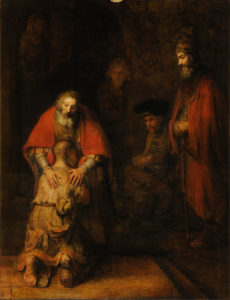
レンブラントの絵画:「放蕩息子の帰還」
Silence and Stillness before God (2 minutes)
Luke 15:20b-24
20b)“But while he was still a long way off, his father saw him and was filled with compassion for him; he ran to his son, threw his arms around him and kissed him.
21) “The son said to him, ‘Father, I have sinned against heaven and against you. I am no longer worthy to be called your son.’
22)”But the father said to his servants, ‘Quick! Bring the best robe and put it on him. Put a ring on his finger and sandals on his feet. 23) Bring the fattened calf and kill it. Let’s have a feast and celebrate. 24) For this son of mine was dead and is alive again; he was lost and is found.’ So they began to celebrate.”
Devotional
In the famous parable of the Prodigal Son, Jesus’ description of the father tells us about God’s love. While the context in which Jesus told this story shows that the main targets are the Pharisees and the teachers (Luke 15:2), and that they are compared to the elder brother. On the other hand, the father, who is compared to God the Father, gives us a glimps of the love of God.
The detailed description of the father tells us many things about what God’s love looks like. First, the father noticed his younger brother at a long distance. The father must have been waiting for his son’s return, looking out the window day after day. He must also have always thought of his son’s face, stature, and look. That is why the father immediately recognized his younger son, even from afar, and he was convinced that it was him. The first reaction of the father was neither reproach or condemnation. The father was “filled with compassion for him; he ran to his son, threw his arms around him and kissed him (v. 20).” In the their society, running was an act of a lowly servant would usually take, but the father didn’t mind running at all.
The younger son confesses to his father that he has sinned against God and against his father so he is no longer worthy to be called his son. But, the father’s action was far beyond his expectations. The father dressed him with the best robe, put a ring on his finger and sandals on his feet. The father killed a fattened calf, and hold a feast for the son. Here, the robe represents kinship, the ring represents inheritance and authority, and the sandals represent the work of the house. The father threw a special party with a very special calf. Namely, the father restored his identity as the son who would inherit the house.
Notice here that “before” the son apologizes, the father runs up to him and hugs him. It shows that the father’s love is greater than the son’s sense of guilt. And “after” the apology, we see that reconciliation with the father has been established, in other words, the relationship between father and son has been restored. We learn that after repentance, reconciliation with God is brought about through Jesus’ atonement, and we are made children of God.
Scazzero writes in Emotionally Healthy Spirituality Day by Day that sometimes the church is full of “younger brothers” who wander from the love of God every time he does not meet their expectations. It is also full of “elder brothers” who are angry, bitter, and grumpy. But people are desparately looking for fathers and mothers in the faith who are able to embrace, love, empathize, be present, and forgive freely.
Sometimes, we disconnect from the relationship with our Father because of our selfishness, like the younger brother, or because of our anger or bitterness, like the elder brother. But, God the Father showed His love to both sons, by running out from the house and embracing the younger brother (v. 20), and by coming out of the house in the midst of the party and pleading the elder brother (v. 28). It is by such love that we are loved. And, not only are we loved, we are made his sons and daughters. This is a promise that we are to succeed our Father’s heart and love for our brothers and sisters. We don’t want to miss out this promise.
Reflection
Who are the “younger brothers” and “elder brothers” that God loves and also invites you to love as well? How does God the Father invite you to love such a person?
Prayer
Father, help me to be still and listen to you, feel your embrace, and rest in your love — and then to speak to others from that place. In Jesus’ name, amen.
Conclude in Silence (2 minutes)
The Return of the Prodigal Son by Rembrandt